
Artificial Turf and Tartan: What Is the Difference Between Football and Athletics Surfaces?
Attention has turned to the pitch for the Egypt–South Sudan match following a report about Mohamed Salah being rested. Artificial turf used on some football pitches differs from the tartan commonly found on athletics tracks, despite the two terms sometimes being confused in coverage.
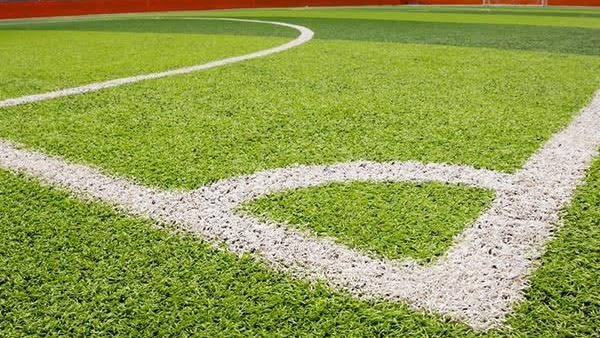
Discussion of Mohamed Salah being rested for Egypt’s match against South Sudan raised questions about the playing surface and whether artificial turf is the same as tartan. In short, the two names do not usually refer to the same type of surface: artificial turf designed for football mimics the appearance of grass, while tartan is most often used on running and athletics tracks.
What is the difference between artificial turf and tartan?
Artificial turf designed for football consists of manufactured fibres fixed to a base, and some systems may include layers of sand or rubber granules. Construction details vary according to the system and the pitch specifications, so it is not accurate to treat all artificial surfaces as identical in their properties.
Tartan, meanwhile, is a common term for a resilient surface used on athletics tracks and designed for running and other sporting activities. The key distinction, therefore, lies in the type of surface, its composition and its intended use—not merely in the fact that both materials are synthetic.
Why do some players prefer natural grass?
The ball’s response and the interaction between footwear and the surface vary from one pitch to another, while movement is also affected by the surface’s specifications and condition, as well as the type of footwear. Some players and coaching staffs express a preference for natural grass or reservations about playing on synthetic surfaces, but that alone does not prove that every artificial pitch is unsuitable or that playing on one inevitably leads to injury.
Football’s laws allow the use of either a natural or artificial surface. For national-team matches and international competitions, an artificial surface must meet the requirements of FIFA’s Quality Programme for Football Turf unless an exemption is granted. This shows that artificial football pitches have specific specifications and standards and are not treated as rubber tracks designed for running.
What do we know about Mohamed Salah’s absence?
According to the report published on the subject, Egypt’s coaching staff and Mohamed Salah agreed that he would not play against South Sudan, and opted to rest him to protect him. However, the report’s headline and the information in its text do not fully align in their description of the match surface as artificial turf or tartan. It should therefore not be asserted that the decision to rest him was a personal refusal by Salah to play on a particular type of surface.
According to the available match information, South Sudan and Egypt are scheduled to play on 29 September 2026. Reports have also mentioned the possibility that Salah could miss the friendly against South Africa on 4 October 2026, but this was presented as a possibility, not as a confirmed decision about his participation.
When comparing the two surfaces, it is therefore more accurate to distinguish artificial grass designed for football from tartan, which is most commonly used on athletics tracks, and to avoid confusing the two or turning reports about a player being rested into confirmation that he refused to play.