
Nagoya launches the twentieth Asian Games with a spectacular opening ceremony despite organisational challenges
The twentieth Asian Games officially began in Nagoya, Japan, with an opening ceremony showcasing Japanese artistic flair, following preparations that faced logistical challenges involving accommodation, weather and the distribution of events.
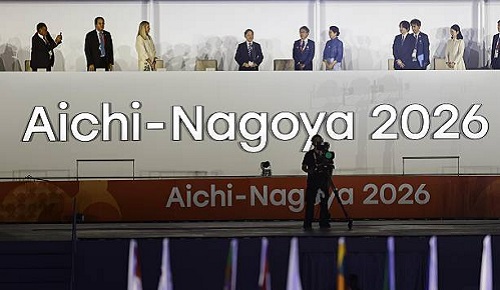
The twentieth Asian Games officially opened in the Japanese city of Nagoya on the evening of Saturday, 19 September 2026, with a ceremony at Nagoya Mizuho Park Athletics Stadium, marking the start of the continental event, which runs until 4 October.
The ceremony was held under the slogan “A Heartbeat in Harmony”, a reference to athletes from across Asia coming together through sporting competition. The main stage was also shaped like a giant heart, while the programme featured dance and music performances and scenes inspired by Japanese culture, alongside traditional fireworks known as “tezutsu”.
The ceremony was attended by Japan’s Emperor Naruhito and Empress Masako, along with several senior sports officials, including Olympic Council of Asia President Sheikh Joaan bin Hamad Al Thani and International Olympic Committee President Kirsty Coventry. The ceremony also included a parade of the participating delegations before the flame was lit to officially launch the Games.
45 countries and 43 sports
The current edition is being held under the slogan “Imagine One Asia”, with delegations from 45 countries and regions competing in 43 sports and 71 disciplines for 469 gold medals. Nagoya and Aichi Prefecture are hosting most of the events, while some competitions are being held outside the prefecture, including swimming in Tokyo and several football matches in Osaka and Shizuoka.
The sports programme includes Olympic disciplines such as athletics, swimming and football, alongside traditional Asian sports such as kurash, kabaddi and sepak takraw. The Games also feature sports added to the programme, including padel, teqball and mixed martial arts.
Preparations faced criticism
The lead-up to the opening was not without organisational and logistical difficulties. The organising committee chose not to build a traditional Olympic village, relying instead on hotels, a cruise ship and temporary wooden containers to house some athletes and officials. The arrangement drew criticism from participating delegations, particularly over bed lengths and the nature of the accommodation, while organisers defended the plan as a way to reduce facilities that might otherwise become unused assets after the Games.
Preparations were also affected by heavy rain and flooding in the Nagoya area during September, which led to the temporary evacuation of hundreds of athletes, with no injuries among participants reported according to available reports. Ahead of the opening, precise entry and spectator identity-checking arrangements were also put in place because of anticipated crowds and security measures.
Despite these challenges, the opening ceremony delivered a celebratory spectacle combining Japanese symbols with modern performances, beginning a Games that will run for 16 days and giving the Asian continent another opportunity to compete in one of the world’s largest multi-sport events.